
How to Read Luck Pillars in BaZi: Comparing Decade Symbols Without Predicting Life Phases
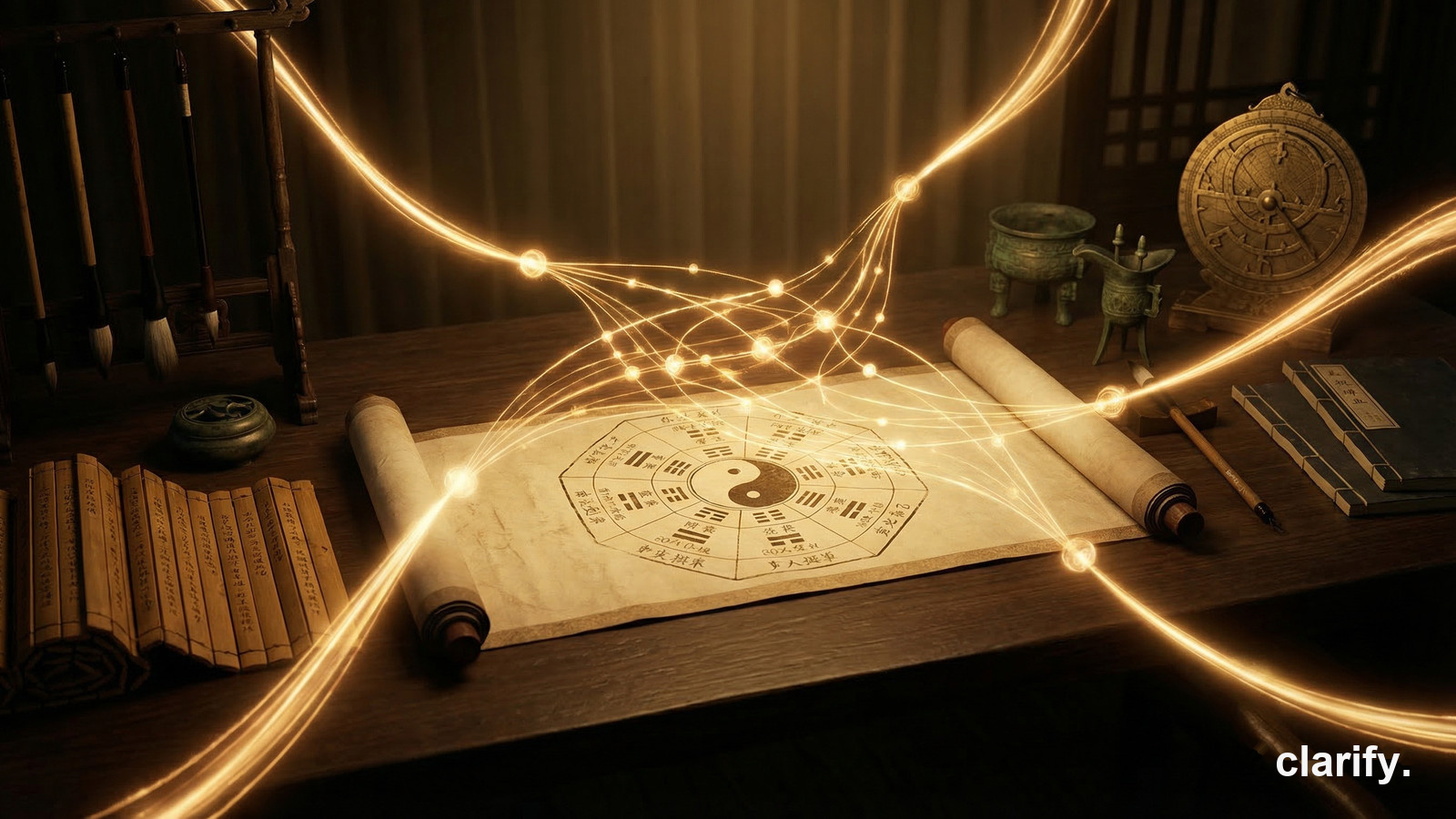
The Natal Chart and Luck Pillars Are Separate Comparison Layers
The natal chart stays the same while the traditional Luck-Pillar sequence changes. This does not explain twenty years of struggle, a sudden rise, a strong start, or later blocks.
In the traditional model, the natal chart supplies a base structure and Luck Pillars add decade-level symbols for comparison. They do not determine activation, support, pressure, or how a person's life functions.
Teaching metaphor only: the natal chart is the fixed symbolic baseline, Luck Pillars are ten-year layers, and annual pillars are one-year layers.
Core Answer
Luck Pillars are ten-year stem-branch sequences in the traditional model. They do not dictate a decade, provide tailwinds or headwinds, beat destiny, or supply flawless timing for expansion, retreat, investment, career, or another decision.
What Exactly Is a Luck Pillar?
A Luck Pillar (Da Yun) is a ten-year stem-branch interval in the traditional sequence. It is a model layer, not a real external operating environment.
A Luck Pillar does not identify who someone is or the real conditions they are moving through. Its ten-year span does not turn possibilities into paths or hidden themes into life patterns.
Why Are Luck Pillars So Powerful?
A decade provides a longer interval for symbolic comparison. Latent chart labels do not wait to manifest or become forces that impact reality.
How to Read: A Reliable 5-Step Process
Step 1: Read the Natal Chart First
Start with the natal chart so the Luck Pillar has a declared comparison baseline. Need and fear are internal labels, not personal conditions.Step 2: Identify the Ten Gods Relationship
Don't just read the element literally. Is it Resource supporting the self, or Companion stealing Wealth?Step 3: Analyze Structural Impact
Does it support, oppose, or redirect an internal chart relation? Do not translate those labels into ease, burden, pressure, or a major transition.Step 4: Check Key Activation Points
Check whether it clashes the Month Branch or combines with the Spouse Palace inside the model. This does not trigger a major life or relationship pivot.Step 5: Summarize the Decade Theme
If a school uses labels such as Opening, Build, Transition, Reorganization, or Pressure, treat them as chart vocabulary—not a forecast of the decade.
Three Typical Effects on the Natal Chart
Structural Support
The pillar may supply an element a school classifies as useful. This does not make life easier or connect real resources.Structural Pressure
The pillar may strengthen an internally unfavorable relation. It does not result in high cost, stress, or real-world imbalance.Reorganization/Rerouting
The pillar may redirect an internal chart relation. It does not force a real shift or predict career or location change.
What Makes a Luck Pillar Feel "Easy"?
"Ease" is a metaphor some schools use for an internally supportive chart relation; it does not show how a decade will feel.
Resolving Bottlenecks
The chart was missing one piece, and the pillar provides it.Respecting the Core
It doesn't clash the Month Branch, roots, or the main structural line.Improving Flow
It thaws blocked energy or clears stagnation in the chart.
What Makes a Luck Pillar Feel "Hard"?
"Difficulty" is a metaphor for an internally conflicting relation; it does not show that a decade will be harder to live through.
Increasing Burden
It amplifies the forces the natal chart is already struggling to handle.Damaging Key Points
Clashing roots, the Month Branch, or the Spouse Palace.Triggering Imbalance
Pushing a previously workable balance into a state of extreme skew.
Real-Life Case Breakdowns
Case 1: Midlife-pillar example. A later pillar may connect internal chart relations that earlier pillars did not. This does not predict a sudden rise or success in midlife.
Case 2: The Same "Clash." A selected school may classify the same clash as opening or disrupting an internal route in different charts. This does not establish liberation, breakthrough, disruption, or instability in real life.
Common Beginner Pitfalls
Reading Pillars Without the Chart
Without a reference point, "good/bad luck" is just a guess.Ignoring the Ten Gods
The same element means different things to different Day Masters.Omitting Symbolic Relations
Clashes and combinations are important chart relations; they do not cause or predict major changes.Treating "Hard" as "Total Failure"
A "hard" decade is an interpretive label, not evidence of restructuring, growth, progress, or failure.Confusing Da Yun and Liu Nian
Separate the ten-year comparison layer (Da Yun) from the one-year layer (Liu Nian); neither is an event trigger.
Summary: A Decade-Long Behavioral Expression
The natal chart stays the same while the Luck-Pillar symbols change. Reading them compares model layers; it does not show whether a decade makes life easier or harder.
FAQ
How do I read my Luck Pillar reliably?
Why does life change so much between decades?
Which is more important: Da Yun or Liu Nian?
A good Luck Pillar = guaranteed success?
Want to See Your Current Decade-Long Theme?
Get an accurate chart to compare the current Luck Pillar with natal symbols—not to determine how a decade interacts with fate or predicts events.
 See My Luck Pillars Now
Disclaimer: Divination and metaphysical systems are traditional cultural frameworks, not modern science or professional advice. Use this content for reference and make decisions from real-world facts and qualified guidance.