
Ten Heavenly Stems Explained: Jia, Yi, Bing, Ding, Wu, Ji, Geng, Xin, Ren, and Gui
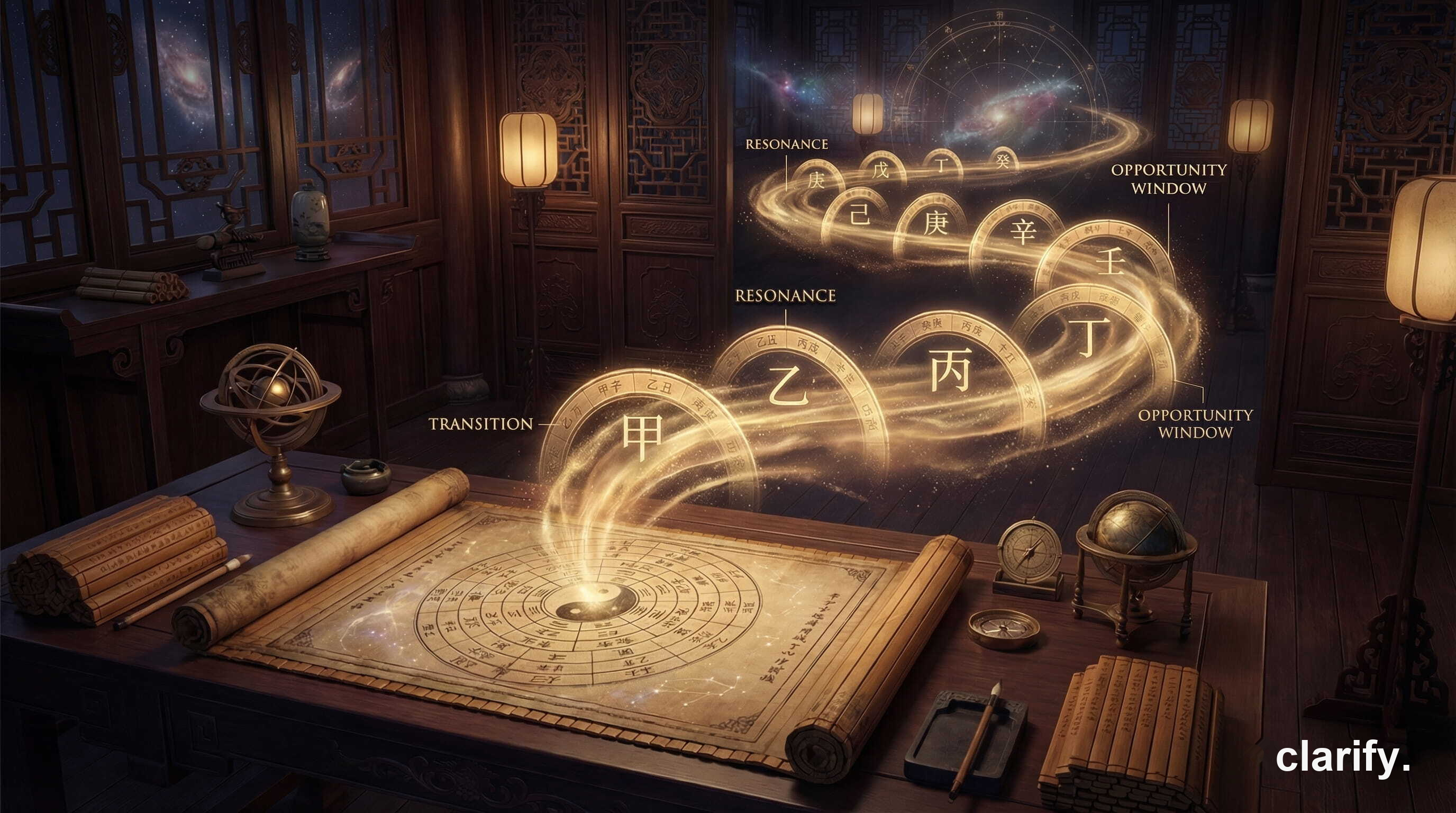
Core Answer
The Ten Heavenly Stems pair the Five Elements with Yin and Yang. Historical texts describe Stems as moving or acting, but they do not dictate social behavior, reveal a mental facade, or accurately decode personality.
Introduction
When people first begin learning BaZi, they usually run into two basic systems right away: the Ten Heavenly Stems and the Twelve Earthly Branches.
The Heavenly Stems are the first layer of visible symbols: Jia, Yi, Bing, Ding, Wu, Ji, Geng, Xin, Ren, Gui.
They are not just a chart to memorize; they are the Five Elements expressed through Yin and Yang.
What Are the Ten Heavenly Stems?
The Ten Heavenly Stems are the Five Elements divided into Yin and Yang.
Each element has two modes: Yang and Yin. This creates ten total expressions.
Elements and Yin-Yang Relationship
The Element tells you what kind of force (Wood, Fire, etc.).
Yin–Yang supplies a traditional direct-versus-subtle symbolic contrast; it does not show how a person behaves.
Stems Detailed
Jia Wood: Tall, Upright tree
Yang Wood, symbolized by a tall tree and traditionally associated with direct growth and expansion. The stem does not establish rigidity, stubbornness, or behavior.Yi Wood: Flexible, Adaptive flowers
Yin Wood, symbolized by flowers, vines, or branches and traditionally associated with adaptive growth. The stem does not establish resilience, overthinking, indecision, or accommodation.Bing Fire: Bright Sun Fire
Yang Fire, symbolized by the sun and traditionally associated with brightness and visibility. The stem does not establish impulsiveness, excess, exposure, or behavior.Ding Fire: Focused Lamp Fire
Yin Fire, symbolized by candlelight or a lamp and traditionally associated with focused light. The stem does not diagnose anxiety, sensitivity, or internal overheating.Wu Earth: Heavy Mountain Earth
Yang Earth, symbolized by mountains or solid ground and traditionally associated with stability. The stem does not establish endurance, conservatism, blockage, or behavior.Ji Earth: Fertile Cultivated Soil
Yin Earth, symbolized by garden soil or fertile land and traditionally associated with cultivation. The stem does not establish organization, nurturing ability, mental heaviness, or inertia.Geng Metal: Sharp Blade Metal
Yang Metal, symbolized by a sword or axe and traditionally associated with cutting and structure. The stem does not measure execution, decisiveness, harshness, or severity.Xin Metal: Refined Jewelry Metal
Yin Metal, symbolized by polished jewelry or fine metal and traditionally associated with refinement. The stem does not establish precision, criticism, sensitivity, or perfectionism.Ren Water: Large Flowing Ocean
Yang Water, symbolized by oceans or large rivers and traditionally associated with broad flow. The stem does not establish vision, strategy, direction, or attention.Gui Water: Fine Permeating Dew
Yin Water, symbolized by rain, mist, or dew and traditionally associated with subtle flow. The stem does not establish intuition, sensitivity, instability, or mental fluctuation.
BaZi Fundamentals Series
How to Learn for Beginners
- Mapping: Jia/Yi = Wood, etc.
- Contrast: Yang is direct; Yin is internal.
- Visuals: Jia is a tree; Ding is a lamp.
Final Thoughts: Ten Expressions of the Five Elements
Understanding the Ten Heavenly Stems is a foundation for BaZi terminology. They are symbolic categories, not living energy inside a person.
Next, explore the Twelve Earthly Branches as the chart's seasonal and hidden-stem layer, not as roots of literal life energy.
FAQ
What are the Ten Heavenly Stems?
How do they relate to the Five Elements?
Why are Jia Wood and Yi Wood different?
Read Your Heavenly Stems
Accurate chart calculation is the essential starting point.
 Read My Heavenly Stems
Disclaimer: Divination and metaphysical systems are traditional cultural frameworks, not modern science or professional advice. Use this content for reference and make decisions from real-world facts and qualified guidance.